Six to one.
That’s what the sportsbooks gave Pittsburgh to make the playoffs before this season started. Their over/under point total was 75.5. The consensus was loud and unanimous: this was a lost season, a transition year, a team that should be shipping out veterans and stockpiling picks. Multiple outlets called the trade deadline the most important day of their season before a puck was even dropped.
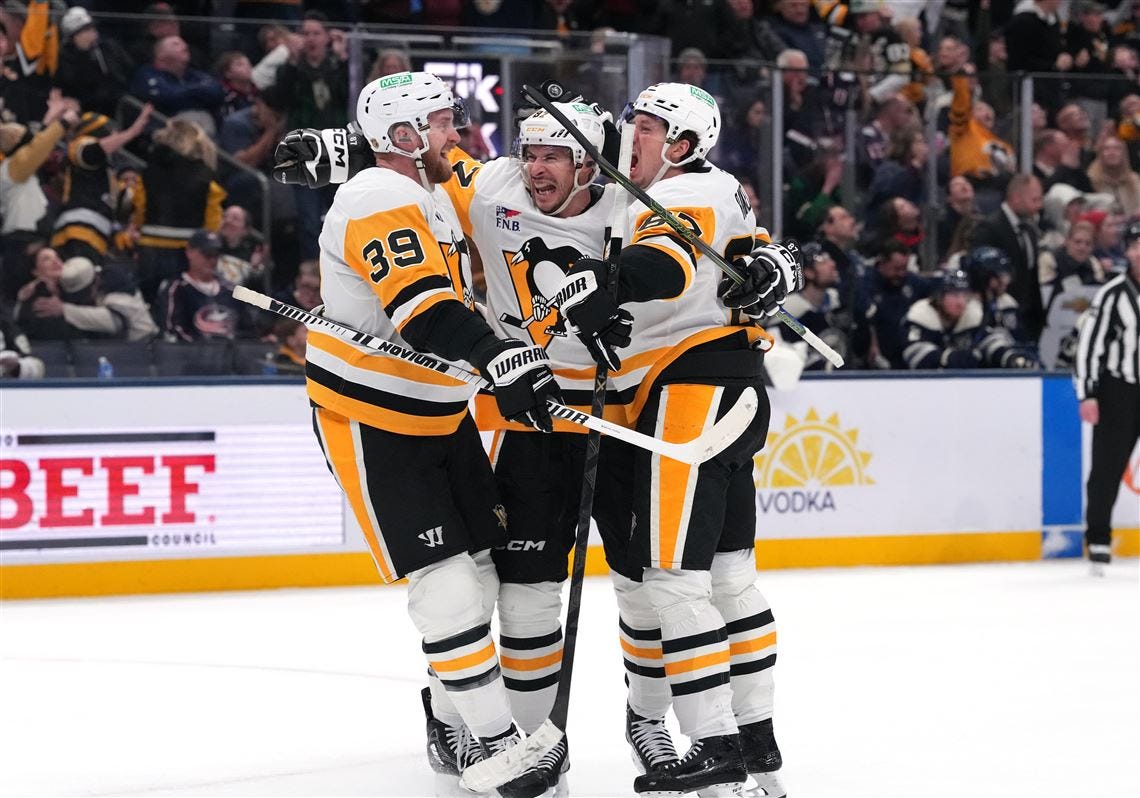
Last night, the Pittsburgh Penguins clinched a playoff spot.
And every front office that spent the last three years pointing at Pittsburgh as the cautionary tale for why you don’t run it back with aging stars just got embarrassed in real time.
Let’s be specific about how wrong everyone was.
FanDuel had Pittsburgh’s playoff odds at +550, tied for worst in the Eastern Conference. Analysts predicted they’d be sellers at the deadline. Their own fanbase debated whether finishing last for a top pick was more valuable than competing. The narrative was settled: Crosby is 38, Malkin is 39, the window is closed, let it go.
Instead, Crosby just finished his 21st consecutive point-per-game season. He has 72 points in 66 games. He passed Steve Yzerman for seventh place on the NHL’s all-time points list. Malkin, who everyone assumed was done, posted 59 points in 54 games, his highest per-60 rate at five-on-five since 2019-20. Erik Karlsson at 35 was voted team MVP and carried the Penguins through stretches when both superstars were out injured. An 18-year-old rookie named Ben Kindel went straight from the draft to the NHL and became a legitimate contributor.
Crosby, Malkin, and Letang have now played together for 20 seasons, the longest-tenured trio in North American professional sports. They were supposed to be done. They are going to the playoffs.
The real story isn’t just that Pittsburgh is good.
It’s what they did to get here.
A season that began with expectations of a high pick in the 2026 draft and reports that it would certainly be Malkin’s last with the Penguins has turned into another shot at a fourth Cup. GM Kyle Dubas didn’t blow it up. He didn’t trade Rust or Rakell as everyone predicted. He added depth: Anthony Mantha, Justin Brazeau, a mid-season deal for Egor Chinakhov, and let the veterans be veterans. He hired Dan Muse, a first-time NHL head coach with zero head coaching experience at this level, and Muse outcoached half the league.
Pittsburgh was winning five of six games down the stretch when it mattered most. That’s a team that believed in itself when basically nobody outside the locker room did.
Here’s why this matters beyond Pittsburgh.
Every year, the tank conversation gets louder in hockey. Blow it up. Collect picks. Trust the process. The analytics crowd has largely won this debate in front offices across the league. The moment a star hits 35, the calculators come out, and the verdict is almost always the same: move on.
Pittsburgh refused. And right now they’re proving the model wrong.
That doesn’t mean tanking is always stupid. It isn’t. But it means the league’s smartest people consistently underestimate two things: what elite players can still do in their late 30s, and what a great locker room is actually worth. You cannot spreadsheet culture. You cannot model what Crosby does to an 18-year-old rookie’s development just by being in the same building.
Ben Kindel is a better hockey player today because Sidney Crosby exists. That doesn’t show up in any projection system.
The playoffs start soon.
Pittsburgh will face one of Philadelphia, Columbus, or the Islanders in the first round. None of those matchups scares them. After everything this season has thrown at this team, the age concerns, the injury absences, the front-office skeptics, the sportsbook odds, they’re not losing sleep over a wild-card opponent.
Whether they go deep or get bounced early, the damage to the conventional wisdom is already done.
Pittsburgh ran it back. It worked. Every GM watching has to sit with that.